Introduction
The human mind is one of the most complex and fascinating parts of our existence. It controls how we think, feel, remember, make decisions, and respond to the world around us. Every action we take begins with a process inside the mind, whether we are aware of it or not.Human mentality is not simply about intelligence or knowledge. It includes our thoughts, emotions, beliefs, attitudes, experiences, and patterns of behavior. Understanding how the mind works can help us make better decisions, manage emotions, build stronger relationships, and improve our overall quality of life
What Is Human Mentality?
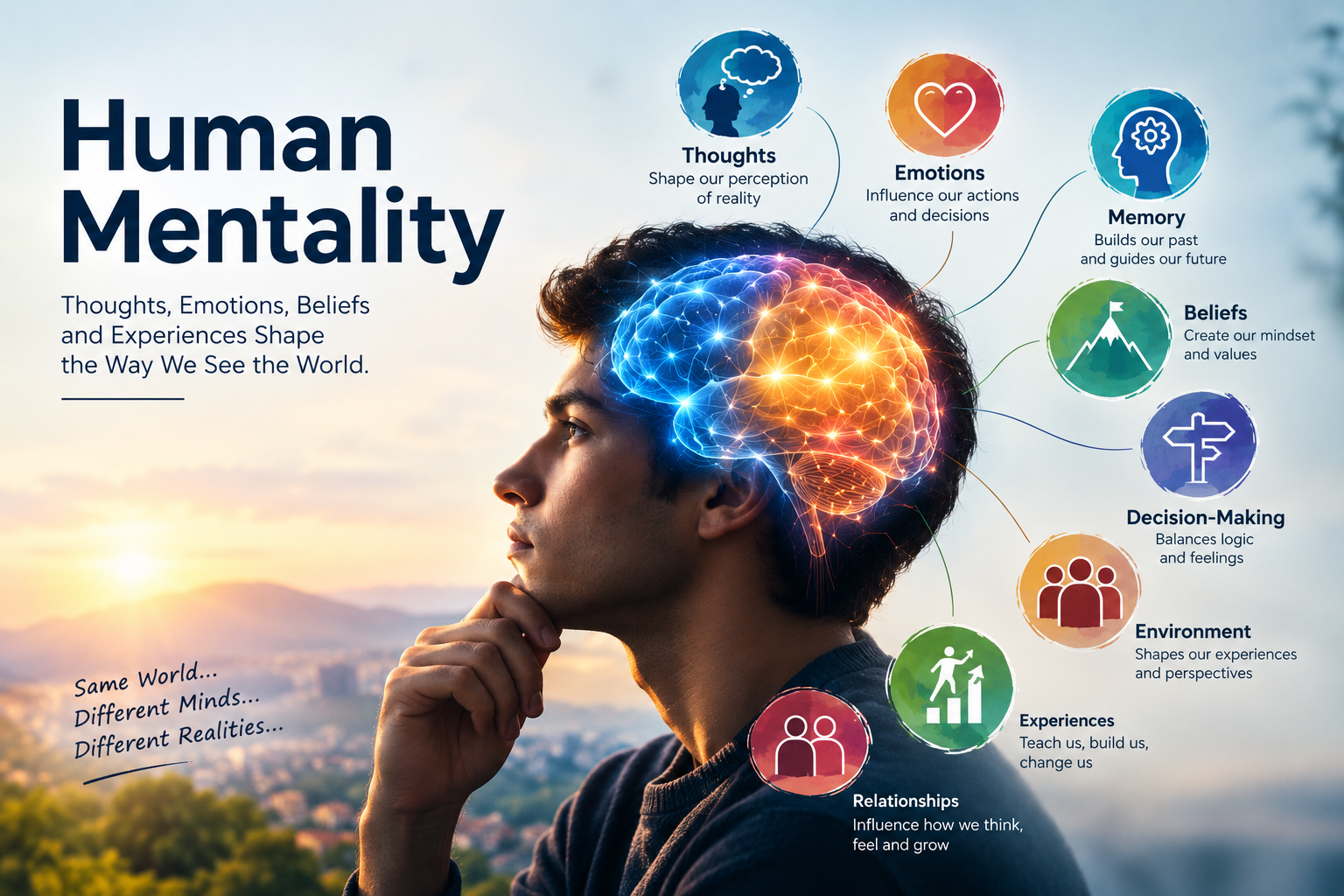
Human mentality refers to the way a person thinks, feels, understands situations, and responds to different experiences. It is shaped by both internal and external factors.Our mentality develops through childhood, education, culture, relationships, personal experiences, and the environment in which we live. Two people may face the same situation but react differently because their thoughts, beliefs, and past experiences are different.For example, one person may see failure as the end of an opportunity, while another may see it as a lesson for future success. The situation is the same, but their mentality changes the way they interpret it
How Does the Human Mind Work?
The human mind works through the interaction of several important processes.
1. Thoughts and Perception
The mind constantly receives information through our senses and tries to understand it. This process is called perception.However, we do not always interpret information objectively. Our expectations, past experiences, and beliefs influence what we notice and how we understand it.For example, a person who expects criticism may interpret a simple suggestion as a negative comment. This shows how our thoughts can influence the way we experience reality.
2. Emotions and Feelings
Emotions are an important part of human mentality. Happiness, sadness, anger, fear, and excitement help us respond to situations and understand what matters to us.Emotions can influence our decisions, relationships, and behavior. For instance, fear may encourage us to avoid danger, while happiness may motivate us to connect with others.Emotions are not weaknesses. They are signals that help us understand our needs and experiences. Learning to recognize and manage them is an important part of emotional intelligence.
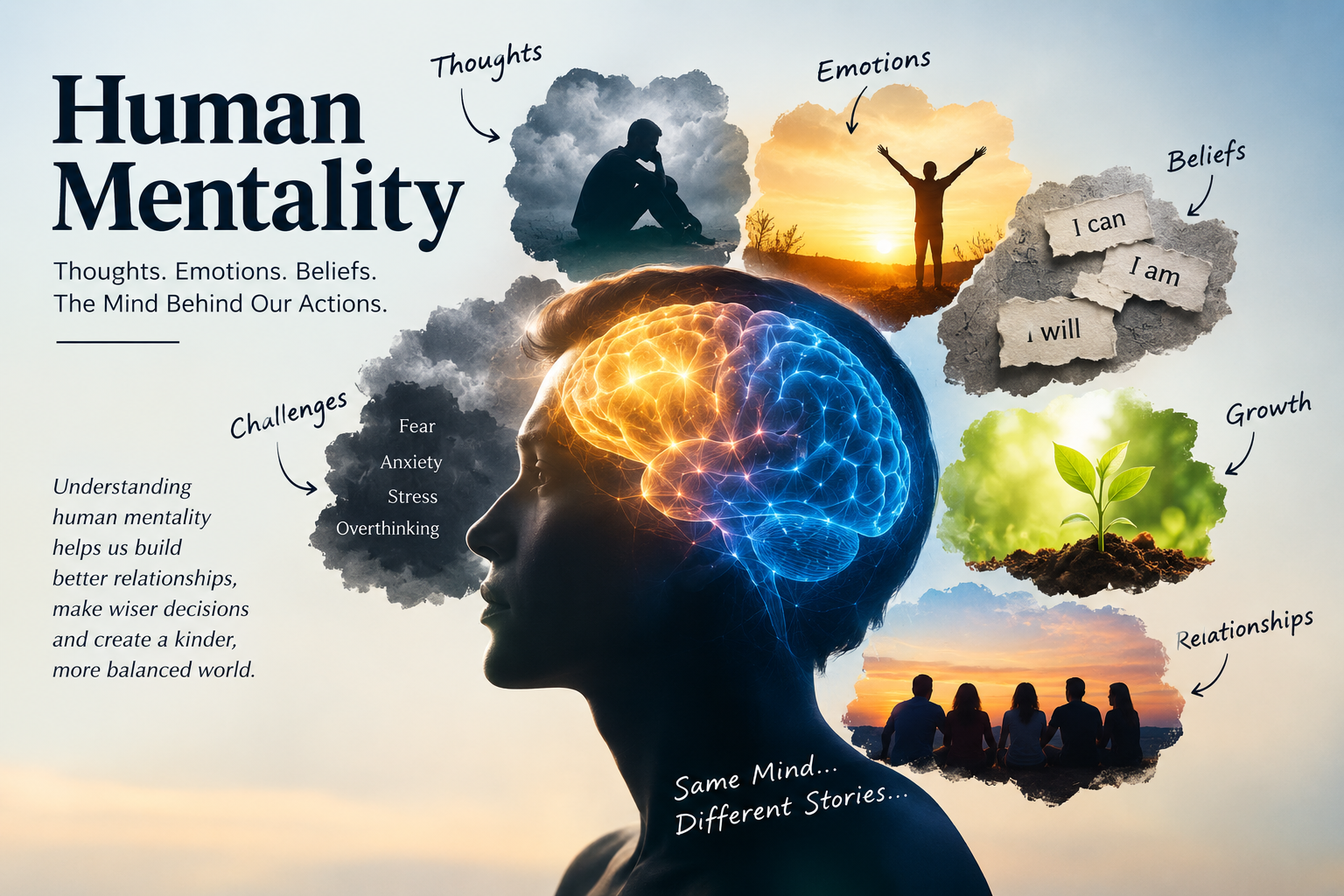
3. Memory and Learning
Memory allows us to store and recall information from our experiences. It helps us learn new skills, recognize people, and make decisions based on the past.Our memories also influence our beliefs and reactions. A positive experience may make us more confident, while a negative experience may make us cautious.Learning changes the way the mind works. Every new experience can help us develop new knowledge, skills, and ways of thinking.
4. Beliefs and Attitudes
Beliefs are ideas that we accept as true, while attitudes are the ways we think and feel about people, situations, or experiences.For example, a person who believes that abilities can improve through effort may be more willing to learn from mistakes. This is often described as a growth mindset.On the other hand, a person who believes that abilities cannot change may avoid challenges because they fear failure.Our beliefs influence our choices, but they are not always accurate. Questioning unhelpful beliefs can help us develop a more balanced perspective.
5. Decision-Making
Human beings make decisions every day, from simple choices to important life decisions. Some decisions are carefully considered, while others happen quickly and automatically.The mind uses both reasoning and emotional responses when making decisions. Sometimes emotions help us understand what we value, while reasoning helps us compare options and consequences.Good decision-making often requires a balance between thinking carefully and understanding our feelings.
Why Do People Think Differently?
People think differently because every individual has a unique combination of experiences, personality, knowledge, and environment.Factors such as family background, education, culture, social relationships, and personal challenges can shape the way a person understands the world.This is why understanding human mentality is important in relationships and society. Instead of assuming that everyone thinks the same way, we can learn to respect different perspectives and communicate more effectively.